
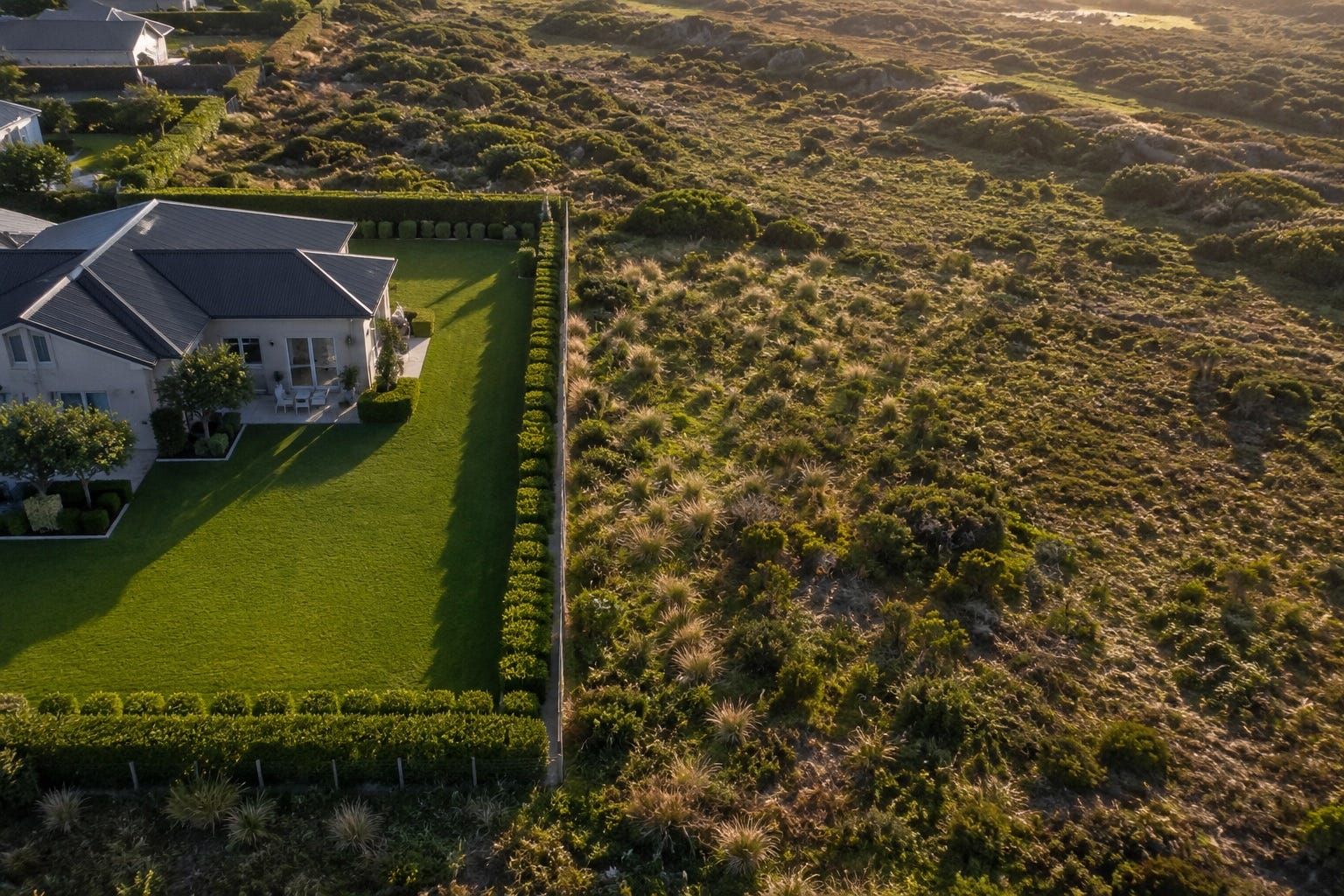
Living on a boat has made me notice something rather odd about the way most people live.
You spend your life inside a small, defined area that belongs to you - usually a house or an apartment. It has physical boundaries that separate it from everybody else’s small, defined area, and inside it you keep your possessions, your food and most of the things you think you need. You often leave your space for a while, usually to go somewhere familiar and fairly predictable. And then you return to exactly the same place. You might do this for years and even your whole life.
None of this seems remarkable. It’s simply how people live.
But from a biological point of view it’s a strange arrangement, because for most of human history we didn’t live anything like this. As nomadic hunters, our ancestors were constantly on the move. Their surroundings changed as the availability of resources changed. And the weather, animals, plants and other people were continually supplying information about what was happening and what needed to be done about it. Like every other animal on earth, humans lived in direct interaction with the world in front of them.
Then something changed.
And I’ve increasingly come to wonder whether much of the world we’ve built since is an attempt to solve a problem that this change created in the first place.
The problem of tomorrow
One of the most important developments in human history was complex language, and it did far more than let us communicate better with each other. For the first time, it gave us the ability to construct things in our minds that weren’t actually happening. Most importantly of all, it allowed us to create the future.
Once you can imagine tomorrow, you can see what might happen tomorrow. And once you can do that, you can see what might go wrong. “What if there isn’t enough food? What if I’ve nowhere to live? What if somebody takes what I have? What if I get sick? What if there isn’t enough later on? What if I’m not prepared for everything?”
Not one of these things has to be happening. They only have to be possible.
And that gave the human brain an entirely new kind of problem to deal with: a virtually unlimited supply of threats that didn’t exist anywhere in the physical environment.
This raises a rather interesting point. Once language allowed us to live inside an imagined future, we began reorganising the real world in an attempt to make that imagined world safe. And when you look at civilisation from that angle, it starts to look rather different.
Making tomorrow safe
Think about the structures modern life is built around. A house guarantees you’ll have shelter tomorrow. Stored food guarantees you’ll have something to eat next month or next year. Property gives you control over certain resources into the future. Money gives you access to resources later. Employment promises that more of it will keep showing up. Insurance protects you against things that haven’t happened. Legal contracts try to guarantee how other people will behave.
Bit by bit, over thousands of years, we’ve built an extraordinary system for trying to make the future predictable. And it has worked. For most people today, particularly in developed countries, physical life is safer and more predictable than it has been for almost any humans who have ever lived.
But alongside all that success something very odd has happened:
Despite all the security we have created, we still don’t seem to feel particularly secure. We still worry about money, health, relationships, work, retirement, politics, the economy and a whole host of other things that might happen. No matter how much security we manage to build, there always seems to be one more threat to us.
I think there’s a reason for that.
The security that we never get
Nature never promised any animal that nothing bad would happen tomorrow. It couldn’t. What evolution provided instead was something far more useful: the ability to respond to whatever actually turns up.
An animal is continually receiving information from its environment through its senses. When something happens, its brain and body respond and it takes action. When the environment changes or when it receives new information, it adjusts its behaviour again. It lives by a sequence: An event happens, it responds, it adapts, it moves back to balance. Security in nature has never come from controlling what happens next. It comes from being equipped to deal with what happens next.
Language made something else possible: instead of simply dealing with an event or circumstance, we could try to control what happens next instead. And that created a problem with no solution because no matter how secure you make your life, you can always imagine something that would threaten that security.
“I have a house - but what if I lose it? I have money - but what if it runs out? I have a job - but what if I lose it? I’m in good health - but what if one day I might not be? I have a relationship - but what if it ends?”
There is no level of security that your imagination can’t defeat with just two words:
“What if?”
The problem is much more than simply worrying too much, though. The brain evolved to respond to reality, and reality happens through the senses. If you hear something moving in the bushes, you can go and look. If there’s a real threat or danger, you respond to it. If there isn’t, the danger alert your body is experiencing ends and you return to a naturally calm state.
But if you’re sitting safely in your house worrying about whether you’ll have enough money in ten years’ time, what sensory information could possibly resolve that? Your eyes can’t see ten years from now, your ears can’t hear it, and your body can’t interact with it in any way at all. There’s no environment to respond to, because the threat exists only as a construction in your mind.
So you try to close the loop the only way you know how. By acquiring more money, creating more protection, doing more planning and trying to exert more control. But no matter what you do, your imagination simply produces another threatening possibility, and the loop stays open. Peace and satisfaction - letting down your guard - never comes.
Which brings me back to the house
I don’t think houses are bad, and I’m certainly not suggesting we abandon civilisation and go back to living as nomadic hunters. But it is interesting what our physical environment shows us about what we’ve been trying to achieve.
The modern home is an extraordinary piece of technology for creating predictability. The temperature stays more or less constant, food is stored a few metres away, water appears from a tap, light appears at the flick of a switch. The outside world can largely be shut out, we can lock the doors, and possessions can be accumulated and protected. It’s a small controlled environment that we’ve built for ourselves and then climbed inside.
But in doing that, we’ve also removed most of the conditions in which the human brain actually evolved: movement, changing surroundings, changing sensory information, regular contact with the natural world, practical interaction with what’s around us, unplanned contact with other people, and the ongoing need to respond to what’s happening.
In doing so something interesting has also happened. We look for ways to connect with the natural world again.
So we talk about how we need to get out into nature. We go for walks. We have gardens and pets. We go camping. And we exercise, because we don’t get enough movement from ordinary life.
We create a change of scenery through travel. We take holidays to escape the very environment we’ve spent so much time and money creating.
We also seek out a community of like minded people because we feel isolated.
It’s as if there is something in us that keeps trying to reconnect with an essential part of ourselves.
What living on a boat has shown me
This has probably become obvious to me because I live a nomadic life on a boat, where my surroundings change continually. I don’t always know where I’ll be living next week, and most days I don’t know where I’ll be sleeping tomorrow night. The weather matters much more than it would on land - the wind and sea conditions determine my comfort and even my safety.
If an anchorage becomes uncomfortable, we have to move. If things break, they need to be fixed, often immediately. Even the sailing itself is an experience of constantly adjusting course, sails and speed according to what nature is doing around us. And as our conditions are constantly changing, so too do any plans we might have.
And as the saying goes: “A sailor’s plans are written in the sand at low tide.”
Being on a boat is a place where information from the actual environment is much more significant than from an imagined one.
The strange part is that this doesn’t produce the insecurity you’d expect. If anything, it does the opposite. You get used to responding to what’s actually happening rather than trying to force them to be different. When something happens, you deal with it. And then you deal with whatever comes after that. Even if you wanted to, there’s simply less opportunity to maintain the illusion that life can be made entirely predictable.
I’m not suggesting that living on a boat is the solution to life’s problems. But living this way has made one thing much easier for me to see. The human organism was never designed to get its sense of security from knowing what’s going to happen. Like the rest of nature, our real security was always our ability to respond intelligently to what is happening.
And those are two very different things.
The paradox of civilisation
This brings us back to the paradox at the heart of all this.
We’ve spent thousands of years trying to make life more predictable. We built permanent settlements and accumulated resources, we invented property and developed systems for storing wealth, we built institutions to regulate behaviour, and we created ever more elaborate ways of predicting, planning and protecting ourselves against whatever might be coming.
But we’ve created trouble for ourselves by expecting these things to give us something that they can’t:
Certainty.
Certainty about the future can never exist because complex language gave us an imagination that has no limits. There will always be another possibility, another danger, something else to prepare for or to guard against. Another “what if?”.
Perhaps the mistake was never building houses, accumulating resources or creating civilisation. It was believing that if we controlled enough of the world around us, we would eventually feel safe.
Nature works on a different principle altogether. It doesn’t try to eliminate uncertainty. It simply gives living things everything they need to respond to uncertainty.
Underneath all our efforts to predict and control life, there’s still a part of us that is extraordinarily well equipped to respond to what is actually happening. It just needs one thing our imagined world can never supply:
Reality.
The information coming in through the senses. What you see, hear, taste, touch and smell. Right now - in this place, these circumstances, this moment.
Maybe that’s why so much human effort to create security produces so little of it. We’ve been trying to make the future safe, and there’s no future here to make safe. There’s only what’s happening now.
Our greatest security never came from knowing what would happen next. It came from knowing, at a level far deeper than thought, that when it did happen, we would know the best thing to do.
To experience the difference between responding to what is real rather than reacting to what is imaginary, try my free tool Nextla. It’s a simple way see what your brain is telling you to do in response to what is actually happening. Check it out here.