

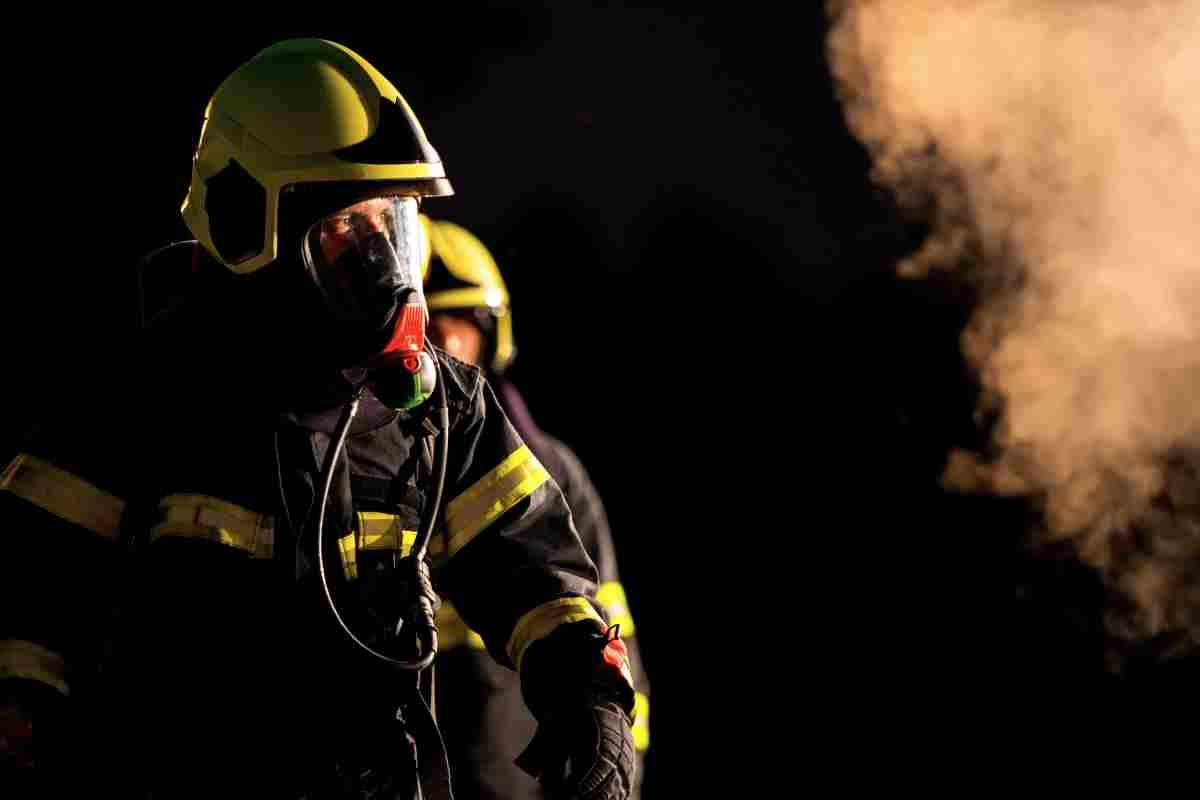
In the 1980s, researcher Gary Klein was studying how firefighters make decisions under pressure. One story stopped him cold:
A fire chief led his crew into a burning house.
It was a straightforward kitchen fire, they were told. So fairly routine.
The crew moved in and started working to put out the flames. Nothing out of the ordinary or to be concerned about.
But then something made the chief stop.
He couldn’t explain why - but something felt wrong. He ordered his crew out immediately.
Sixty seconds later, the floor collapsed. The fire wasn’t just in the kitchen. It was burning beneath them, in the basement.
Fortunately, everyone walked away alive.
Later, researchers asked him: How did you know there was something wrong and you had to leave the scene?
The chief confessed he simply didn’t know why. Not consciously. But somehow, the heat seemed wrong for a kitchen fire. The flames weren’t behaving the way they should. The sound of the fire was different too.
None of these things registered as separate thoughts. But they added up to a situation that simply felt wrong and left him with an overwhelming urge:
Get out.
But here’s what’s really interesting. The chief didn’t pause to analyse his options. He didn’t evaluate anything. He didn’t hold a mental committee meeting about the risk-to-reward ratio of staying versus leaving.
He just knew what to do.
Klein spent years studying people who make life-or-death decisions under pressure, including firefighters, military commanders, ICU nurses, and even chess grandmasters.
What he found surprised everyone.
The best decision-makers weren’t the ones who thought the hardest.
They were the ones who had stopped relying on thinking altogether.
They didn’t compare options or run calculations. They recognised patterns - instantly, automatically, below the level of conscious thought - and they acted on them.
Klein called it naturalistic decision-making. What he was really describing was instinct that had been sharpened enough to be trusted and relied upon.
Interestingly, less experienced firefighters in Klein’s research did think. They ran comparisons. They considered options A, B, and C. They tried to figure out what to do.
And they were slower and made more mistakes.
Thinking, it turned out, didn’t help. In fact, it became part of the problem.
I’m sure you’ve probably noticed this yourself.
You agonise over a decision for days - running over it in your mind, asking everyone’s opinion, making lists of options, gathering ideas and trying to figure out the best way to handle it. And eventually you decide on an action that that feels sort-of okay but not quite right. It seems good enough or “the best considering” even though you have a slight undercurrent of doubt.
Then one morning you wake up and from “somewhere else” the real right answer hits you. And not as a possibility, but as a certainty - you just know that this is what you should do.
What changed? Nothing. You didn’t get any new information to help you with your decision.
All that really happened was that for a while you stopped thinking about the problem - and the right answer appeared.
Although this has happened to all of us, here’s what most of us don’t realise. This isn’t random or luck.
It’s a sign of the system that was built into our brain long before thinking was part of human experience.
What the research keeps pointing to is that conscious thinking plays a much smaller role in effective decision-making than most of us have been taught to believe. A significant part of the brain’s real intelligence operates before thinking ever gets involved.
And while thinking has given us real advantages, it has also quietly trained us to distrust the intelligence that was already there - the kind that doesn’t argue or debate, and doesn’t need to run the numbers.
Most of us already know this experience. The answer appears the moment we stop forcing it. Not because we gave up, but because something deeper finally had room to respond. Maybe the real problem isn’t that we don’t know what to do. Maybe it’s that we’ve been taught to trust thinking more than the intelligence underneath it.
This is not a small shift. It changes everything about how you approach decisions, problems, and the way you live.
This is what I teach - not as philosophy, but as biology. You already have access to an intelligence that is faster, more accurate, and less exhausting than thinking. You don’t need to develop it or learn it. You just need to stop overriding it. The answer that appeared one morning without effort - that wasn’t a fluke. That was the real system, finally getting a word in.